Empty Stores Not Main Issue
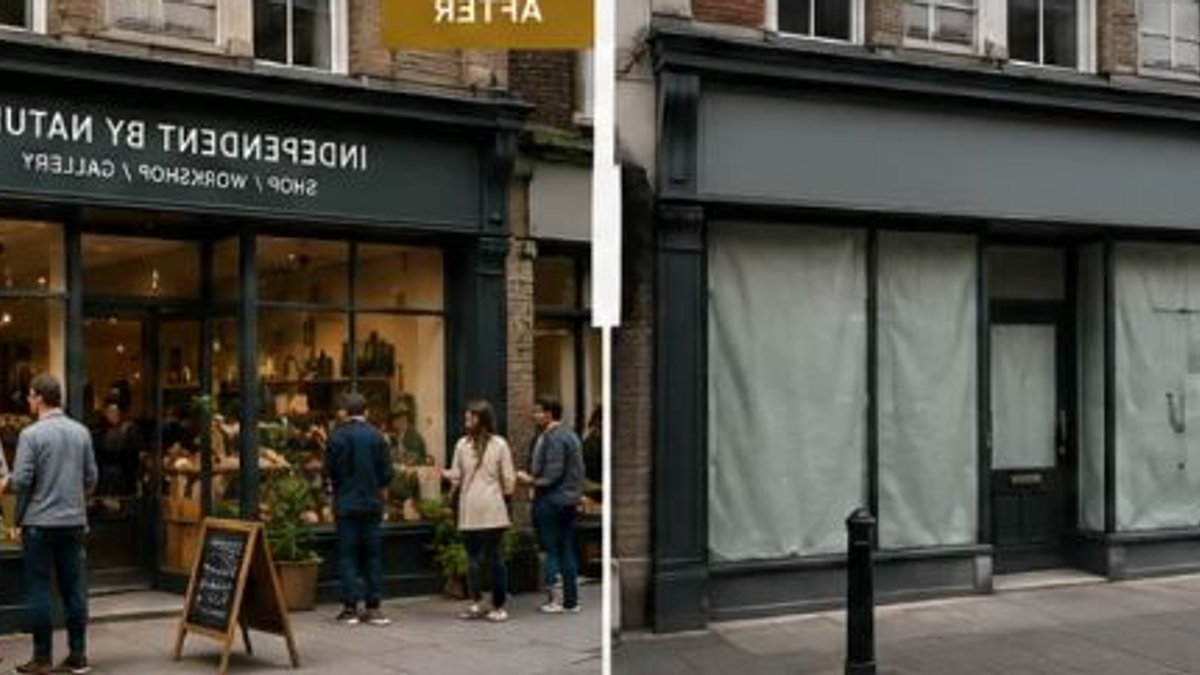
The empty shop is not the problem, according to Ilona Klevansky Taillade, founder of Six and Sons. The real issue lies in the ordinary European city street, with its mix of independent shops, cafes, and vacant units. These streets, found in every European city, are losing their character as leases expire and independents cannot renew on the same terms.
The Struggle of Independent Retailers
In the UK, independent retailers accounted for over 84% of all store closures in 2024, a 45% surge from the previous year. Similarly, in the Netherlands, retail vacancy in the country’s 40 largest city centres stood at 8.3% at the start of 2024, with 2,500 empty units, many of which had been vacant for over a year.
Ilona Klevansky Taillade notes that the main forces behind this trend are structural, not cyclical. Lease costs are priced for volume retailers, and permanently fragmented footfall makes it difficult for single-function stores to recover on their own. Average inner-city retail units, typically between 100 to 200 square metres, are neither large enough to absorb the cost structure of a multi-use concept nor small enough to be genuinely affordable for a solo creator or maker.
Related: Aareal Bank boosts Spanish mall portfolio
A Different Commercial Model
A different commercial model is needed to address this issue. One approach is “meanwhile use,” which involves activating vacant space with temporary occupants while permanent solutions are developed or negotiated.
Civic Curation Function
A civic curation function is needed to treat the health of the independent retail mix as a policy outcome, not an accidental byproduct of the market. This function would involve a permanent body with a budget, mandate, and real relationships with both landlords and the independent operator community. It would provide meanwhile leases, curate and qualify independent operators, and broker turnover-rent arrangements and revenue-share models.
The BID model, where local businesses collectively levy funds to invest in the area, is the closest existing structure to what is needed. However, BIDs are funded by a levy on existing businesses, which means they are limited by the health of those businesses and have no power over leasing, no direct relationship with landlords, and no mandate to curate what comes next. They require a more full approach to support local businesses.
Related: Standard Chartered backs Dublin rental project
Co-Retailing Model
A 100 to 200 square metre unit is too expensive for one independent operator, but it is not too expensive for three or four operating as a collective. The co-retailing model, where multiple independent brands share one physical address, each with its own identity, together covering the operational costs, is already being tested in various forms.
For shopping centres, the proposition is even clearer. A co-retail unit generates content, community, and repeat visits. It gives a centre a story to tell and creates the kind of tenant mix that no directory of chains can produce. The cities and shopping centres that will win the next decade are not the ones that build the best new market, but the ones that protect and cultivate what they already have, making them more attractive to investors and consumers alike.
Three things need to change simultaneously: lease structures need to evolve, a civic curation function needs to exist in every major European city, and shared infrastructure needs to be built into the ecosystem. The economics of the 100-square-metre unit only work if operators are not each carrying the full overhead alone. The community came first, and commerce followed. Ilona Klevansky Taillade believes that this model works, and it is now up to cities and businesses to build it and reap the benefits.


