Syrian artist paints vivid childhood memories
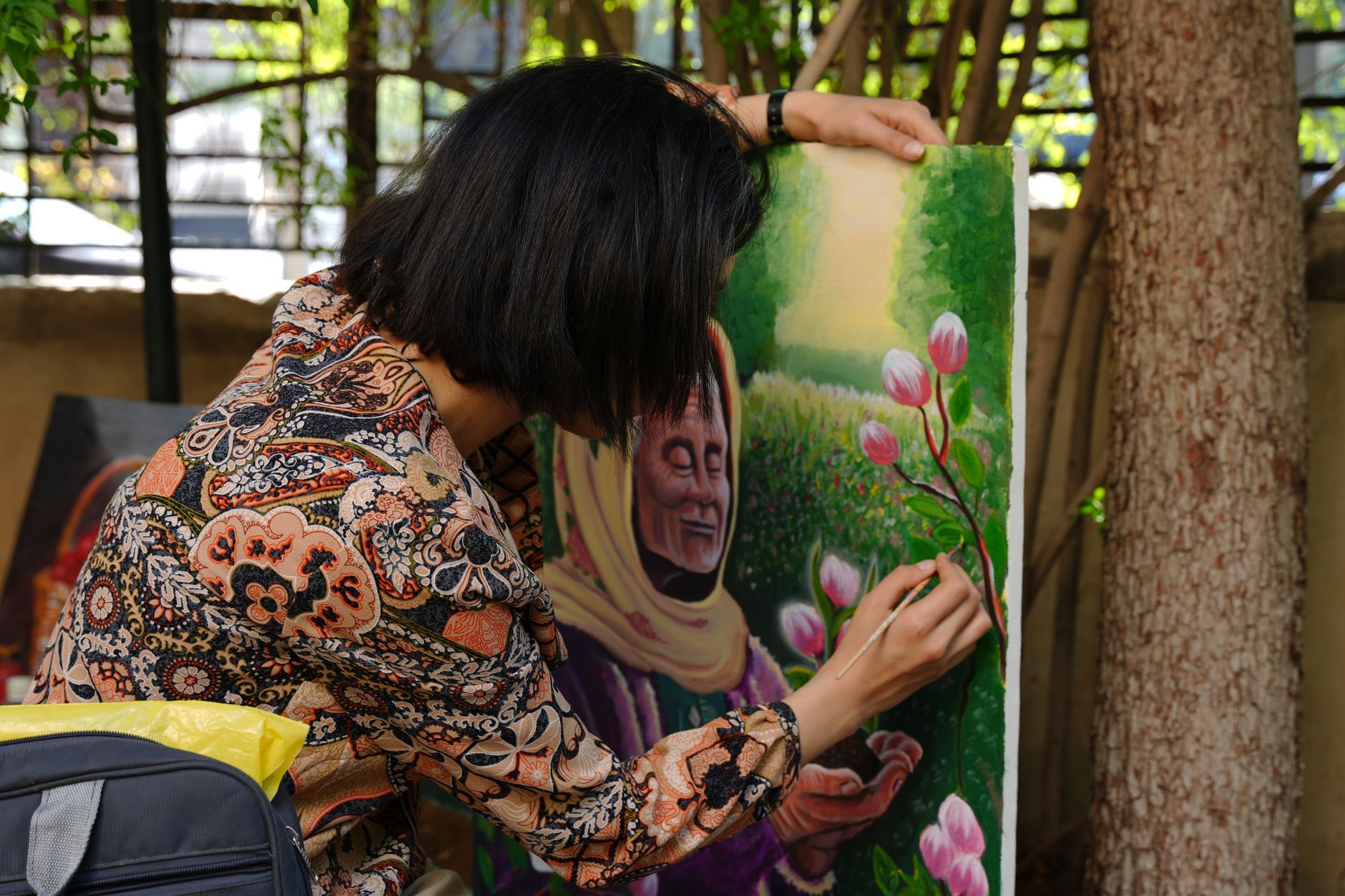
Syrian artist Farah Alimi builds her paintings from memory, layering thick acrylic to recreate the textures of her childhood in Damascus. In one piece, a seated figure wears a red tarboosh, his form outlined in raised strokes. The table beside him overflows with yellow flowers, oranges, and a bowl of fruit, the scene stitched together from fragments of her past.
Her early years were filled with the warmth of extended family, the scent of jasmine, and the music of Fairuz and Ziad Rahbani. Her grandfather, her jiddo, was a constant presence as a caretaker and companion. Thursday nights were sacred—school ended early, and the family gathered at his house.
Related: DMCC introduces new licence for commodity firms
She invites viewers to touch the works.
This habit mirrored her own habit of running her fingers over the raised tiles in her grandfather’s home. When she returned to Damascus in 2025, she found those same limestone patterns in his house—ones she had unknowingly recreated in her paintings for years.
Related: British Land CEO unveils top priorities
Her work avoids direct political themes, but the choice to focus on domestic scenes holds meaning. Western audiences often note the absence of conflict imagery, replaced instead by lively depictions of family, food, and architecture. She avoids black in her palette, using layered blues, greens, and reds to achieve depth. The goal is simple: “I want people to be happy when they see my paintings.”
In recent years, her practice has grown. A collaboration with Paris atelier Paramaz led her to paint on leather, a process that required months of testing to perfect. The limited-edition bags and belts sold quickly. She’s also experimenting with frosting, painting directly onto cakes and imagining an exhibition where the works could be eaten. The cookies would mirror her signature tiled surfaces, another way to preserve memory.
Related: US and Iran Sign Preliminary Gulf Accord
Certain elements repeat: forms, textured surfaces, and a focus on joy. “My biggest fear was losing my childhood memories,” she says. “So I painted them to remind myself.”
Her paintings carry those moments forward, through colour and touch, in scenes of gathering and closeness. Damascus, she now knows, will always be home.


