Apple and Nvidia now the only $5 trillion companies
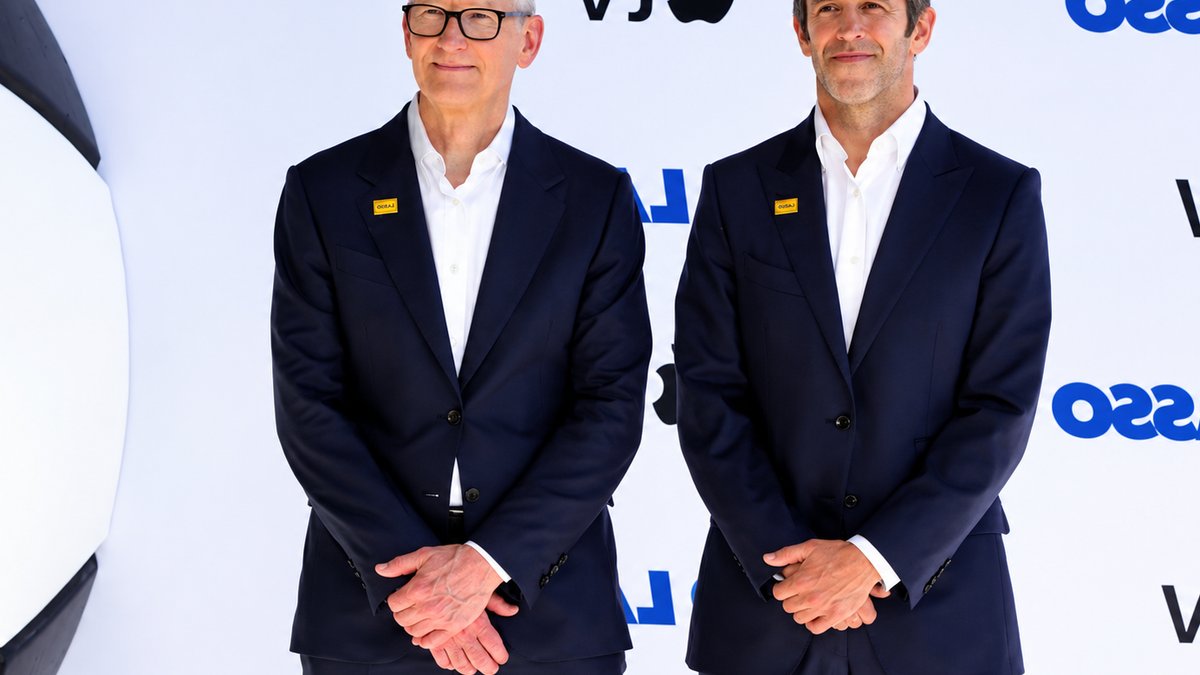
Apple reached a $5 trillion market capitalization on Wednesday, securing its place alongside Nvidia as the only companies to achieve that valuation. This milestone arrived during the final days of Tim Cook’s 15-year tenure as CEO, which concluded in late August, and became the second company to close above the $5 trillion mark, capping the era and posing an implicit challenge to new Chief Executive John Ternus. Shares settled at a record $5.005 trillion, according to Dow Jones Market Data, after surpassing the mark for the first time—though Apple had previously breached the threshold six times during intraday trading without closing above it.
Cook’s leadership transformed Apple into a financial powerhouse. Under his direction, the company’s market value grew 13 times larger, annual iPhone sales nearly quadrupled, and its services division expanded from $10 billion to over $100 billion. The Apple Watch and AirPods now contribute more than $30 billion annually, while shareholder returns through buybacks and dividends exceeded $1 trillion. Despite slower revenue growth compared to the broader market, Apple’s shares remain highly valued, reflecting strong investor confidence in its stability and earnings predictability. Today, Apple’s stock trades at a premium relative to the overall S&P 500, even though its revenue growth rate lags behind the index’s average, because investors view it as a safe, predictable investment.
Cook’s strategy emphasized disciplined investment. While competitors invested heavily in AI infrastructure and data centers, Apple prioritized high-margin hardware and services, reducing capital expenditure risks. This caution proved advantageous during the AI boom, as rivals faced rising costs for chips and infrastructure. Today, Apple confronts a new obstacle: escalating component costs for memory and storage, driven by surging data center demand.
The company has increased prices across its product line, even for older iPhones, yet shares have climbed 25% since the first price hikes, indicating strong consumer willingness to pay for its integrated ecosystem. Analysts suggest this reflects Apple’s ability to offset margin pressures by maintaining high demand, with Bank of America’s Wamsi Mohan noting that buyers appear willing to accept premium pricing for the seamless experience Apple’s ecosystem provides.
Analysts point to Apple’s ability to balance volume growth with margin protection as the key to its resilience. Bank of America’s Wamsi Mohan highlighted the potential of the upcoming iPhone Duo, a foldable model, and an enhanced Siri AI to drive device upgrades. However, Apple’s AI challenges persist. After failing to develop a competitive advanced AI model and allowing Siri to fall behind rivals, the company now relies on a Google-supported redesign.
Though still behind competitors, the updated Siri integrates smoothly with iPhones and benefits from access to extensive user data, though future AI advancements may outstrip Apple’s ability to fully capitalize on it. The new Siri, released this fall, marks a shift in strategy, leveraging Google’s technology while maintaining tight integration with Apple’s hardware, but its long-term effectiveness remains uncertain as AI competitors accelerate innovation.


